
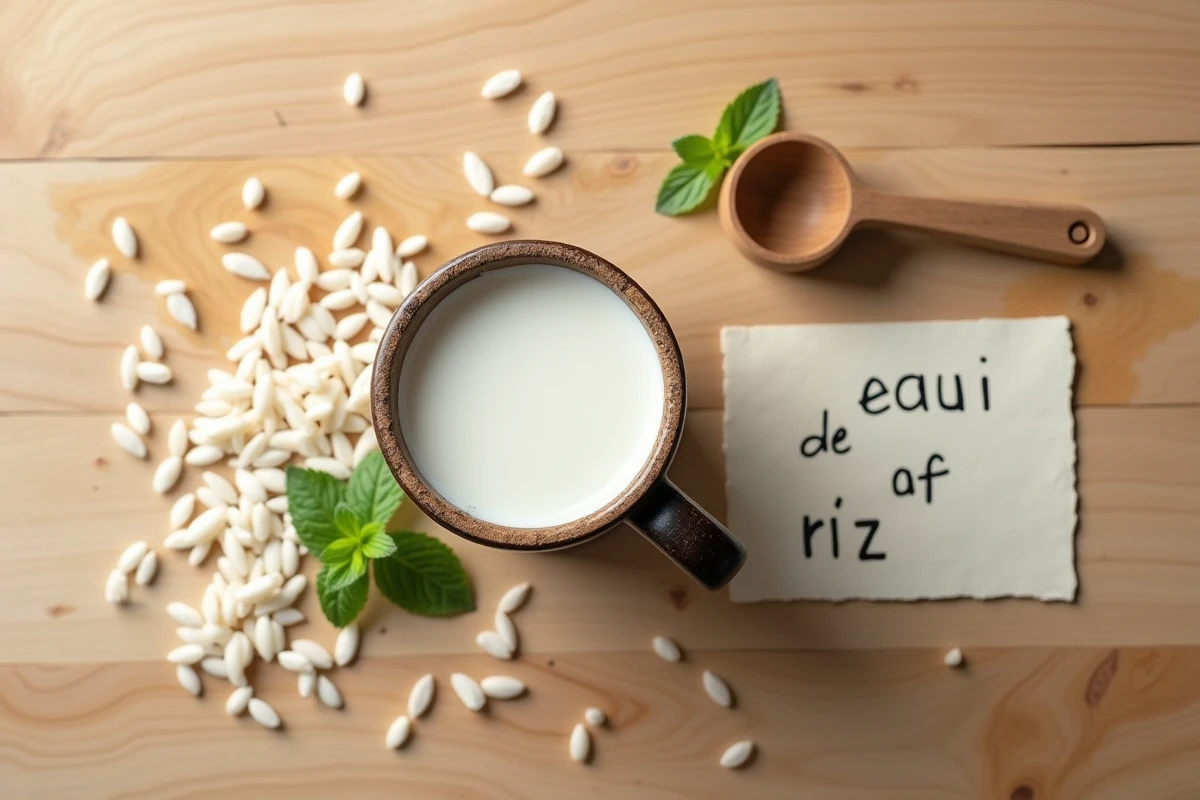
Rice water used in sports recovery is based on a simple principle: recovering the cooking water from rice, rich in partially soluble starch, to make a post-effort drink. The carbohydrate profile of this solution is similar to that of rehydration drinks based on hydrolyzed rice studied in a sports context, with low osmolarity and rapid gastric emptying.
Osmolarity and gastric emptying: why rice water stands out from isotonic drinks
Most commercial isotonic drinks calibrate their osmolarity between 270 and 330 mOsm/L to approximate that of blood plasma. Rice water, on the other hand, is naturally below this threshold when prepared with a classic ratio of one volume of rice to three to four volumes of water.
This hypotonic osmolarity accelerates gastric emptying and reduces the risk of bloating or reflux during the recovery window. Studies published between 2022 and 2024 on partially hydrolyzed rice solutions show that they restore fluid and electrolyte balance as well as, or slightly better than, traditional sports drinks.
We recommend clearly distinguishing the nature of the starch involved. White rice releases a very digestible starch (predominantly amylopectin), while brown rice adds fibers that slow down absorption. For a goal of rapid recovery, white rice remains the consistent choice. Brown rice is better suited for a solid recovery meal taken later.
Those who wish to delve deeper into the subject can drink rice water with Fiteo and find a detailed protocol suitable for different disciplines.

Electrolyte profile and regulatory limits of rice water for athletes
Rice water provides potassium, magnesium, and phosphorus in modest amounts. However, its sodium content remains very low, which poses a direct problem for rehydration after intense or prolonged effort.
EFSA clarified in its updated opinions between 2021 and 2024 that claims like “optimizes recovery” can only be made if the drink meets strict criteria for carbohydrates, sodium, and osmolarity. Homemade rice water, which is non-standardized and not enriched with electrolytes, does not meet these criteria.
In practice, this means two things:
- After moderate effort (less than an hour, limited sweating), rice water alone may suffice to restart glycogen resynthesis without digestive discomfort.
- After prolonged effort or in high heat, it is essential to supplement with a source of sodium, either by adding a pinch of salt (about one gram per liter) or by accompanying the drink with a salty food.
- For athletes who already consume an electrolyte-enriched drink during the session, rice water post-effort plays a complementary role focused on carbohydrate intake, not strict rehydration.
Inorganic arsenic in rice: a parameter to consider for daily use
Promoting rice water as a daily recovery drink without addressing the issue of arsenic would be a technical omission. EFSA (2021 report, supplemented by opinions from ANSES in 2022-2023) recommends limiting daily consumption of rice and derivatives, especially among high consumers and children.
Rice naturally accumulates inorganic arsenic, a contaminant present in soils and irrigation waters. Cooking in a large volume of water, followed by rinsing, reduces the arsenic content of the grain. Ironically, the cooking water then concentrates some of this solubilized arsenic.
We observe that this risk remains marginal for occasional use (two to three times a week after training). It becomes relevant for a high-volume athlete who would consume several servings of rice daily in various forms (rice cream at breakfast, rice at meals, rice water in recovery).
Three levers to reduce exposure:
- Prefer basmati rice, which generally has lower arsenic levels than round rice or brown rice.
- Rinse the rice thoroughly before cooking (at least three rinses) and cook in a large excess of water, then recover only a fraction of this water rather than the whole.
- Alternate carbohydrate sources for recovery: rice water on some days, banana or applesauce on others, to avoid chronic overexposure.
Rice water and the recovery window: protocol and association with proteins
Rice water provides almost no protein. Its role is limited to the carbohydrate fraction of recovery. To maximize glycogen resynthesis and muscle repair, pairing it with a protein source remains necessary.
The most direct approach is to mix warm rice water with a dose of whey or plant protein. The slightly starchy texture of rice water lends itself well to this mixture, better than a simple glass of water, reducing the watery sensation of a typical shaker. The result resembles a liquid and light version of rice cream, without the caloric density.
For athletes who do not tolerate whey well when hot, allowing the rice water to cool to room temperature before adding the protein avoids excessive denaturation and clumping. A dairy-free alternative: combine rice water with pea or hemp protein, whose amino acid profile complements that of rice (rich in methionine, low in lysine).
The timing remains that of the classic post-effort window, within thirty to sixty minutes after stopping exercise, when muscle sensitivity to insulin and glucose uptake is highest. Beyond this window, a complete solid meal takes over more effectively than a drink.
Rice water is not a miracle product nor a substitute for formulated recovery drinks. It is a low-cost carbohydrate solution, well tolerated digestively, that finds its place in a structured nutritional strategy, provided that its shortcomings in sodium and protein are compensated for, and that the frequency of consumption is monitored to limit arsenic exposure.