
A 1970s apartment with single-glazed windows, a boiler nearing the end of its life and an original electrical panel: this is a renovation profile we come across regularly. The pitfall with this type of project is treating each problem in isolation.
Replacing the windows without addressing ventilation, redoing the electrical work after the plasterboard has been installed, or signing quotes before checking which grants are available. These sequencing mistakes cost time and money, and can sometimes leave the property non-compliant.
Check the RGE certification before signing a contractor’s quote
Before comparing prices, start with something most guides gloss over: the contractor’s actual status at the time you commit. Since October 10, 2026, the DGCCRF can temporarily suspend a professional’s RGE certification or Mon Accompagnateur Rénov’ accreditation in cases of fraud or misleading commercial practices.
In practical terms, a contractor may display an RGE certificate on their website even though it was revoked the week before. If you sign a quote with a professional whose certification has been suspended, your MaPrimeRénov’ application will be rejected. You will not receive reimbursement, even if the work meets technical requirements.
You can check the official France Rénov’ directory, which lists certified companies in real time. Note the certificate’s expiry date and compare it with the planned completion date. A certification that expires in two months when the project will take four is a direct funding risk. For more help preparing your project, D Kom Déco’s renovation advice covers several common scenarios.

Renovation budget: the item that runs over and the one people forget
The item most likely to run over budget is structural work. You open up a wall to create an open-plan kitchen and discover a cracked load-bearing beam, lead drainage pipes or a floor with level differences of several centimetres. Each discovery triggers work that was not included in the original quote.
Setting aside a contingency fund for unexpected work is not just vague advice to be cautious. It can make the difference between a project that gets completed and one that grinds to a halt halfway through because the funds have run out.
The cost people forget is temporary accommodation. Living in a property while major renovation work is underway (replacing the heating system, upgrading insulation, redoing the plumbing) can mean paying for accommodation, furniture storage and daily transport. These costs do not appear on any contractor’s quote, but they add to the project’s overall budget.
Put your financing plan in place before work begins
First, list all expenses (work, materials, temporary accommodation, surveys and any project management fees), then your available funds: savings, loans and grants. Finalise the financing plan before signing the first quote, not afterwards.
One recent point to watch: for applications submitted since September 1, 2026, the MaPrimeRénov’ supported renovation pathway excludes heating equipment that runs on fossil fuels in detached houses. If your renovation plan involves keeping a gas boiler, this pathway will not be available to fund the work. This factor can sometimes change the entire financing plan.
Renovation work sequence: the order that protects the building
Follow a simple principle: work from the building envelope inwards, and from messy tasks to clean ones. A typical full renovation follows a specific sequence:
- Demolition and structural work (opening up walls, structural repairs, damp treatment) come first, because they create dust and vibrations that can damage finishes
- Utility systems (plumbing, electrical work, ventilation) must be installed before closing up the walls, to avoid having to break open what you have just put in
- Thermal insulation followed by mechanical ventilation, in that order, because insulating without ventilation causes condensation problems that can damage materials within a few months
- Partitions, flooring, painting and finishing touches come last, once the building is dry and all systems have been tested
Switching the order of two steps means having to redo work. Laying a floor before the plumbing is finished risks a leak on a brand-new surface. Painting before the electrical work is complete means touching up every cable run.
Project handover: the moment that determines your warranty rights
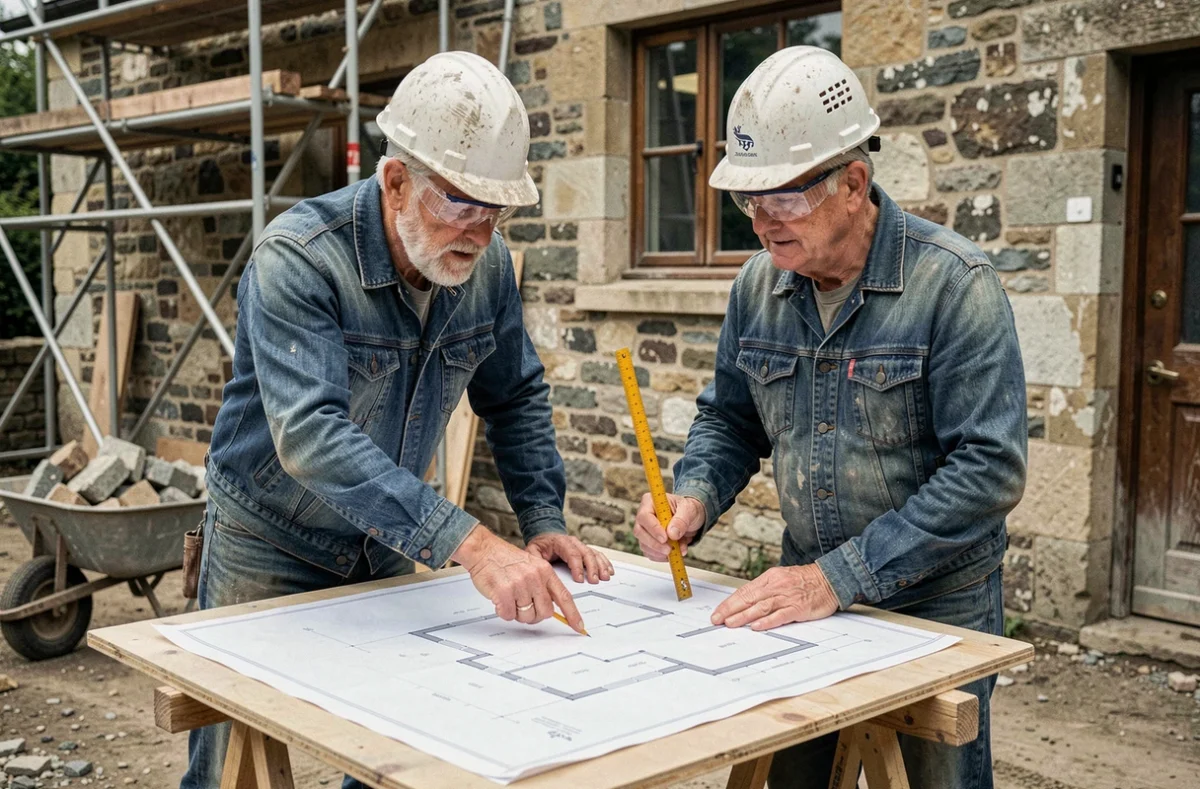
Handover is a legal act, not just a courtesy visit. It is formalised in a report signed by the client (you) and the contractor. This document triggers the one-year warranty for defects in workmanship. During this period, the professional must fix any defects found, whether they are reported on the day of handover or discovered in the months that follow.
Record defects in detail
A vague note (“bathroom finish needs attention”) offers little protection. Describe the defect, its exact location and, if possible, take a timestamped photo. “Missing grout on the north wall of the shower, third row up from the floor” provides a clear reference in the event of a dispute.
If the professional refuses to sign the report, you can have the refusal recorded by a bailiff. The cost of doing so is modest compared with the value of the renovation work at stake.
One final point that is often overlooked: the warranty for defects in workmanship only covers issues reported at handover or that arise afterwards. Visible defects that are not recorded in the report on the day of handover are much harder to pursue. Check every room in the property methodically on handover day: turn on the lights, run the taps, operate the shutters and test the sockets.