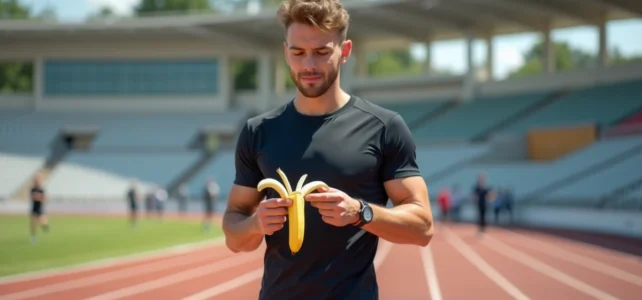
The banana imposes nothing. It is athletes who have chosen it, year after year, for its simplicity and effectiveness. Rich in quickly assimilated carbohydrates and packed with potassium, it easily outperforms industrial energy bars: it nourishes, supports effort, and leaves unnecessary additives in the locker room. Several studies show that this little fruit, consumed just before a session, enhances muscle performance and pushes fatigue further away.
But the effectiveness of the banana depends on a point often overlooked: the right moment and the ripeness of the fruit. If not properly timed, this snack can generate more undesirable effects than energy. Guidelines in sports nutrition are evolving, and this fruit stands out in the sanitized world of supplements: it forces a rethink of certain reflexes when preparing.
Why is the banana always invited before effort?
It can be spotted in sports bags, on locker room benches, and even at the starting lines. This is not the result of chance or a passing trend; the banana has established itself through real-world testing. Convenient to carry, ideal for meeting temporary sugar needs, it offers a cocktail that ticks all the boxes: fast-digesting carbohydrates, a mineral boost, and no digestive heaviness. For those who have ever tried exercising on an empty stomach or too heavily loaded, eating a banana before sports quickly becomes a reassuring habit.
A well-ripened banana delivers what the body expects: stable energy, potassium to reduce cramps, and sugars that don’t cause rollercoaster effects. Many recognize this consistency: those who engage in interval training or long outings often describe a more even feeling, fewer jolts, and less fatigue. Without marketing slogans or exaggerated promises, the banana relies on experience and repetition: it has carved out a place for performance and also aids recovery when everything is done.
The right moment: when to consume the banana for maximum effect?
A banana at the right time is better than the most effective energy drink consumed too late. To optimize intake, aim for the window of 30 to 60 minutes before the start of effort. At this precise moment, a ripe banana unleashes all its advantages: its carbohydrates quickly pass the digestive barrier and gradually release fructose and glucose. The result: usable fuel just in time, without unnecessary weight in the stomach.
The combination of simple carbohydrates and fiber provides stable energy, sustaining for a long time without causing sudden cravings. If the goal is to extend duration or intensify the session, this choice often makes the difference. Some athletes even pair the banana with a light source of protein, such as yogurt or a few oats, to kickstart muscle repair right after leaving the gym.
To ensure this guideline finds its place in your routine, here are the main time slots to know:
- Before activity (30 to 60 minutes prior) for immediate energy and easy digestion.
- At the end of exercise to facilitate recovery and replenish muscle stores.
The ripeness of the fruit changes the game. Prefer a banana with a well-freckled skin: its sugars are better assimilated, and digestion is swift. Depending on the planned effort and your comfort, you have a simple lever to adjust. This discreet routine has become established for many, supporting both adrenaline spikes and the return to calm.
Common mistakes and tips for a truly useful banana before sports
No one is immune to a nutritional misstep. The first classic mistake: opting for a banana that is too green. The starch it contains escapes rapid digestion and can sometimes cause pain or even intestinal disorders. It’s better to choose a well-ripened banana with marked skin for maximum energy efficiency without bloating.
Another bad habit: nibbling on your banana at the very last second. Swallowing just before starting overloads the digestive system, often to the detriment of comfort and performance during the session. This waiting time of 30 to 60 minutes is not trivial: it transforms the fruit into support, never a hindrance.
The last trap: believing that the banana does it all. Functional nutrition is not limited to a single fruit. Muscle building and repair also require protein, and constant hydration plays a background role. In a quick break or after a class, the banana is included; it does not replace anything on its own.
To avoid these pitfalls, keep these simple points in mind:
- Always prefer a banana with yellow skin well-speckled: better effects, quick digestion.
- Adjust the quantity to the planned effort: half a banana may suffice for a brief workout, a whole one for an extended session.
- Think of overall balance: the fruit adds to a varied diet and never takes the place of a real meal.
Discreet and modest, the banana proves at every outing that a natural choice can stand up to technology. Behind its spots, it hides unsuspected power, liveliness, endurance, and recovery. In the end, it’s an ordinary fruit, supported by precise actions, that becomes the faithful companion of all those who love to push their limits. Who would suspect such a reserve of energy in a speckled yellow skin?