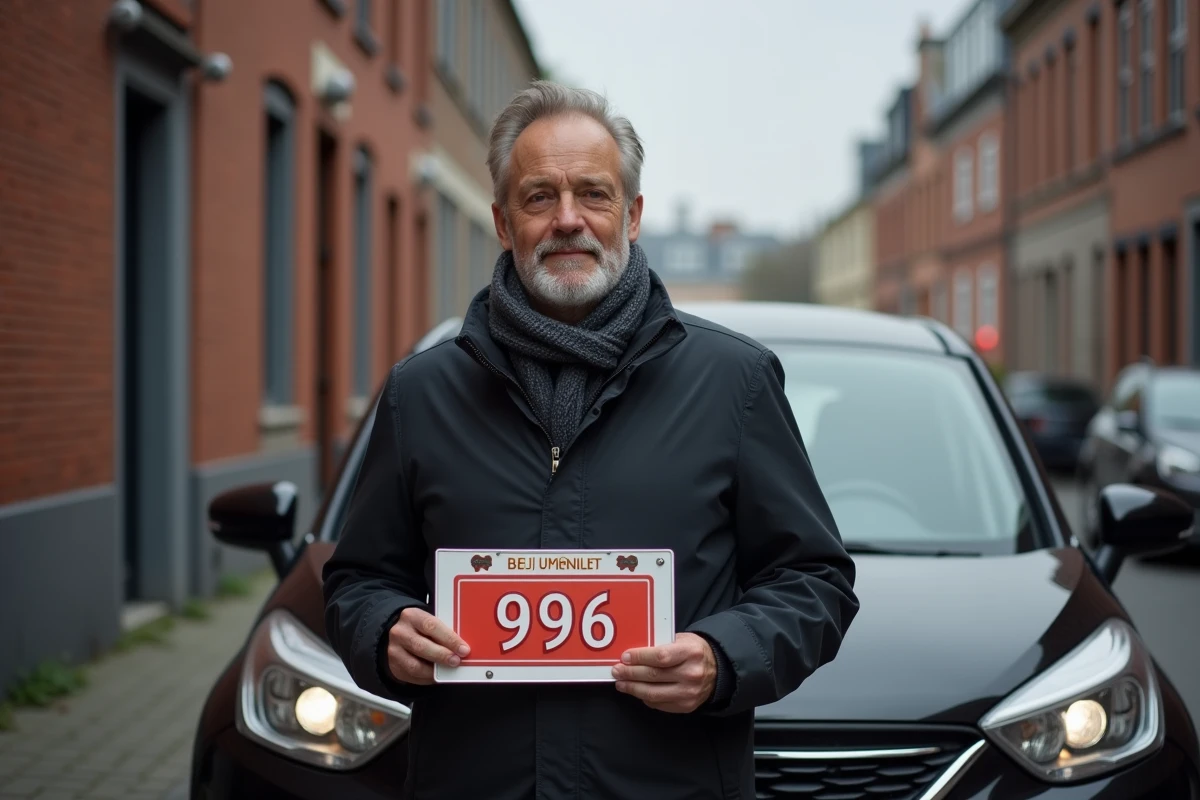
A simple color code, and an entire country has stood out on its roads for over a century. In Belgium, it is the burgundy characters that adorn the license plates, where Europe displays its blacks and blues. Neither folklore nor graphic whim: behind this hue lies a technical constraint that has become tradition.
What are the different license plates for in Belgium?
Far from being limited to a single version, Belgium has built an entire system around its license plates. Each category responds to its own logic, linked to the nature of the vehicle, the profile of the owner, or the intended use. They are much more than just numbers: each format, each code, each color translates a specific administrative need, a necessary step to circulate, pass a technical inspection, or register the ownership of a car.
The classic plate, white background, red lettering, equips the majority of private cars, whether new or used. An obvious choice in the Belgian vehicle fleet, but far from the only one. Other models coexist, each designed for a specific situation:
- temporary plates: assigned while waiting for the final registration certificate or for vehicles in transit, they allow circulation for a limited period, often within the framework of an export or transit process.
- commercial plates: daily tools for dealers and garages, they allow the movement of vehicles that have not yet been sold or registered.
- personalized plates: for an additional fee, it is possible to shape your plate to your image, as long as the combination remains compliant with readability and format rules.
Why this red on white? This contrast is not trivial. To discover why Belgian plates are red, one must delve into a unique history, made up of technical choices and administrative decisions. This hue, visible from afar, was designed to facilitate the work of law enforcement and has established itself as a distinguishing sign. Beyond the symbol, each type of plate shapes the organization of road control, from registration to passing the technical inspection.
Why the red color: origin, symbolism, and specific uses
Impossible to overlook: the red plate is part of the Belgian landscape. Since 1899, the date of the establishment of national registration, the choice of burgundy is neither a whim nor a patriotic impulse. It is a technical compromise: on a white background, red offers maximum contrast, making reading easy regardless of weather conditions. Fog, twilight, rain: the lettering remains legible, everywhere and all the time.
Gradually, this specificity has become a signature. Red, in the Belgian imagination, is not just a color: it embodies visibility, vigilance, and a certain administrative rigor. No question of yielding to graphic trends or European fashion: Belgium stands firm on its color, almost a manifesto against uniformity. The white background with red characters represents consistency, uniqueness, and the continuity of a deliberate choice.
In practice, almost all private vehicles, utility vehicles, and motorcycles display red, except for diplomatic plates or certain temporary models. It is not just a matter of tradition: the specific hue limits the risks of counterfeiting, as it proves difficult to reproduce accurately. Red thus structures the entire identification system on Belgian roads, reinforcing the reliability of the system against fraud.

Obtaining a red plate in Belgium: procedures, conditions, and tips to know
Requesting a red license plate in Belgium is not automatic, but the process is well-defined and precise. It all starts with a declaration to the DIV, the administration in charge of vehicles. The file must be complete: manufacturer’s or importer’s certificate of conformity, up-to-date insurance card, appropriate supporting documents (registration certificate for an already registered vehicle, European certificate of conformity for a first registration).
Before obtaining the number, the administration checks the tax situation: VAT paid, customs duties settled if necessary. The request can be made online or at the counter, depending on the owner’s preference. Once validated, the plate is manufactured by the official printer and sent to the chosen address, without detours.
Some cases require a specific procedure, especially for temporary plates: transit, export, or testing. These plates, valid for a short period, adhere to very specific allocation criteria. To collect a plate, it must be reported to the DIV and returned within the allotted time. A piece of advice shared by professionals: leave nothing to chance. Prepare all documents, check their compliance, ensure that the plate category corresponds to your use. These details speed up the reception of the famous red plate and avoid many administrative hassles.
On Belgian roads, the red plate is not just a regulatory accessory. It embodies a history, a logic, a way of doing things that transcends generations. And tomorrow, who knows? Perhaps this burgundy red, become commonplace for some and rare for others, will inspire new choices elsewhere in Europe.