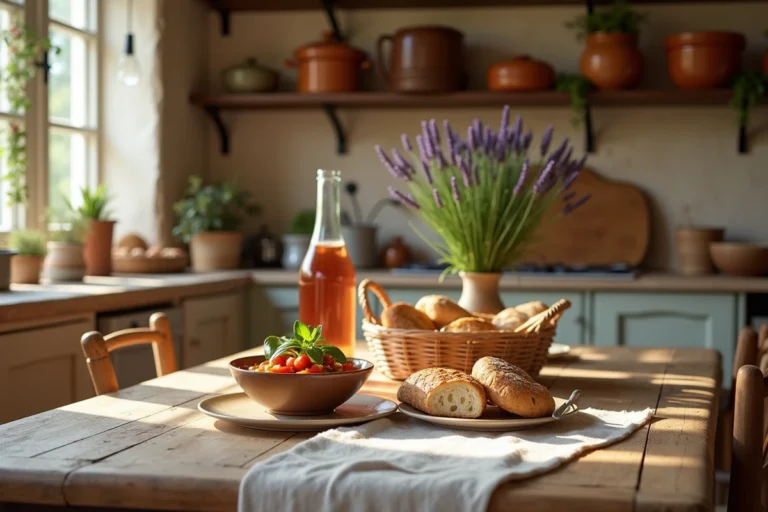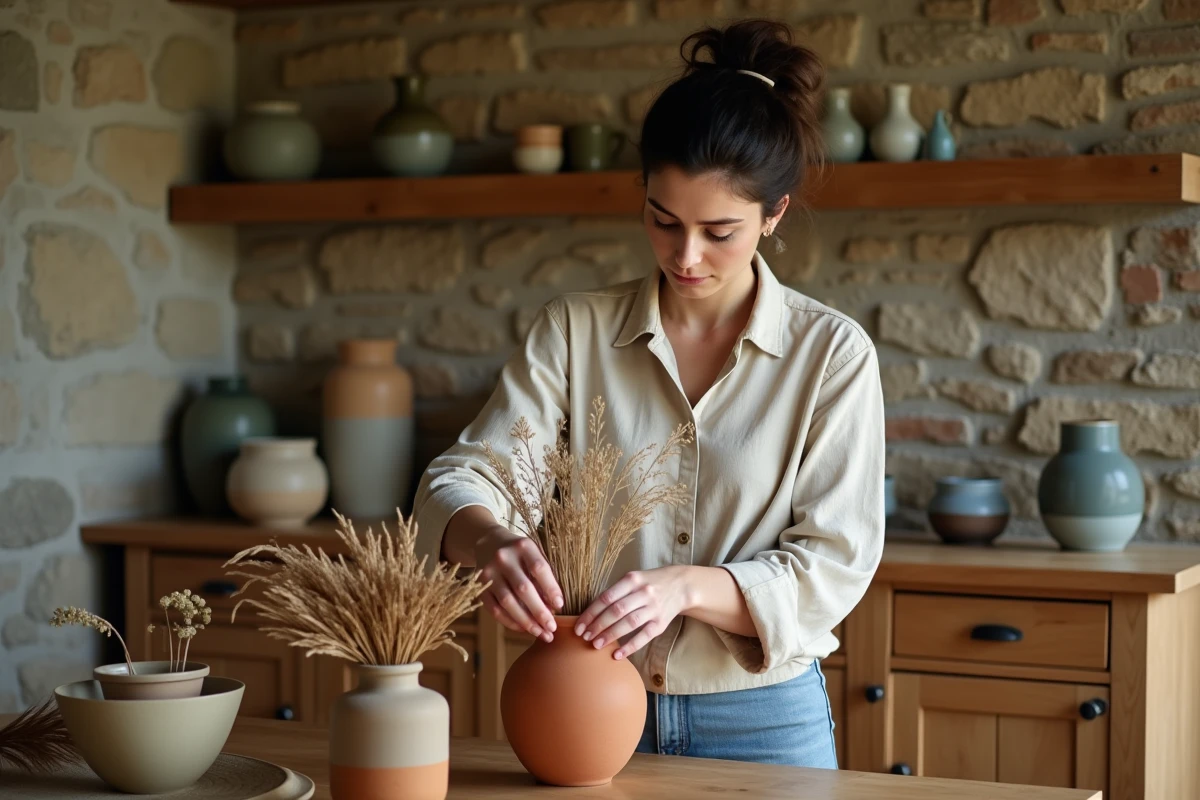
The decorative know-how in Bordeaux is based on a precise combination: an architectural heritage from the 18th century, a dense artisanal fabric in Gironde, and a recent dynamic around bio-sourced materials. These three factors produce identifiable decorative codes that can be transposed into interiors located outside of Nouvelle-Aquitaine.
Bordeaux Ironwork and Modern Minimalist Integration
Bordeaux ornamental ironwork has been experiencing a revival in recent years. According to the magazine Décoration & Patrimoine (April 2026), Bordeaux artisans surpass those from Toulouse in minimalist integration, thanks to a revival of 18th-century techniques adapted to contemporary lines. The result: metal railings, consoles, and light fixtures that maintain a clean design while recalling the balconies of Bordeaux’s blonde stone.
To replicate this approach at home, favor pieces made of steel or wrought iron with matte finishes, featuring simple curves rather than elaborate scrolls. Discover the decorative know-how in Bordeaux at L’Atelier du Bricolage to identify the techniques and materials suited for this type of project.
The idea is not to reproduce a Haussmannian interior. The current Bordeaux principle consists of isolating a heritage element (a railing, a framed mirror, a metal shelf) and placing it in a sober environment, often white or greige, to create a unique focal point in the room.
Bio-sourced Materials and Bordeaux Durable Certification
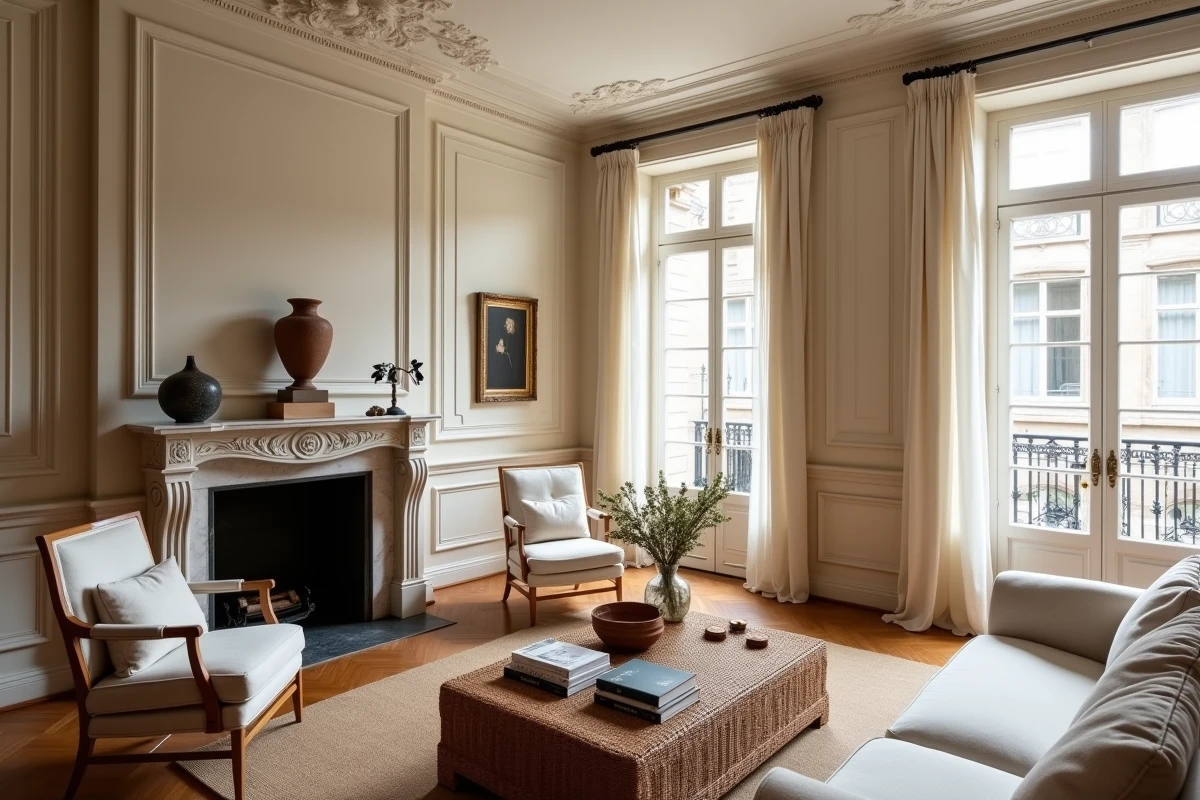
Since January 2026, local aids for interior renovation in Bordeaux require a Bordeaux Durable certification (Municipal Council deliberation n°2026-045). This requirement pushes artisans and individuals towards bio-sourced materials: hemp wool, expanded cork panels, lime plasters, and maritime pine from the Landes forests.
The interest goes beyond local regulatory frameworks. These materials offer hygrometric and thermal properties that standard plasterboard does not provide. A lime-hemp plaster, for example, naturally regulates the humidity of a living space, altering the perception of comfort without affecting heating.
Criteria for Choosing a Bio-sourced Material in Interior Renovation
- Compatibility with the existing substrate: a bio-sourced plaster does not apply to all walls. Check the nature of the substrate (stone, brick, concrete) before choosing the formulation
- The local origin of the material, which reduces transportation costs and ensures traceability. Maritime pine and cork are abundant in Nouvelle-Aquitaine
- The implementation: some natural plasters require a longer drying time and specific artisanal expertise. Plan for a longer project timeline compared to conventional materials
Smart LED Lighting Inspired by Bordeaux Interiors
A study from the Institut Supérieur des Métiers de l’Habitat (March 2026) indicates that the majority of recent residential projects in Gironde incorporate smart LED lighting inspired by the illumination of Bordeaux châteaux. The principle relies on warm color temperatures (around 2,700 K), programmed intensity variations according to the time of day, and indirect placement that avoids visible sources.
Transposing this approach does not require an extravagant budget. The technical challenge lies in positioning: LED strips behind a cornice, under a low cabinet, or along a bookshelf create grazing light that sculpts the volumes. The effect is architectural, not merely decorative.
What Indirect Lighting Changes in a Room
A central ceiling light provides uniform illumination and flattens reliefs. Indirect lighting reveals the textures of walls and materials, giving full meaning to the natural plasters or forged metal elements mentioned earlier. The two Bordeaux approaches (raw materials and crafted light) work together.
Set your LEDs to a warm temperature and adjustable intensity. Scenario programming (reading, dining, evening) replicates the light gradation that large Bordeaux residences achieve through the depth of their windows and the thickness of their walls.
Collaborations Between Artisans and Designers and Upcycled Pieces in Gironde
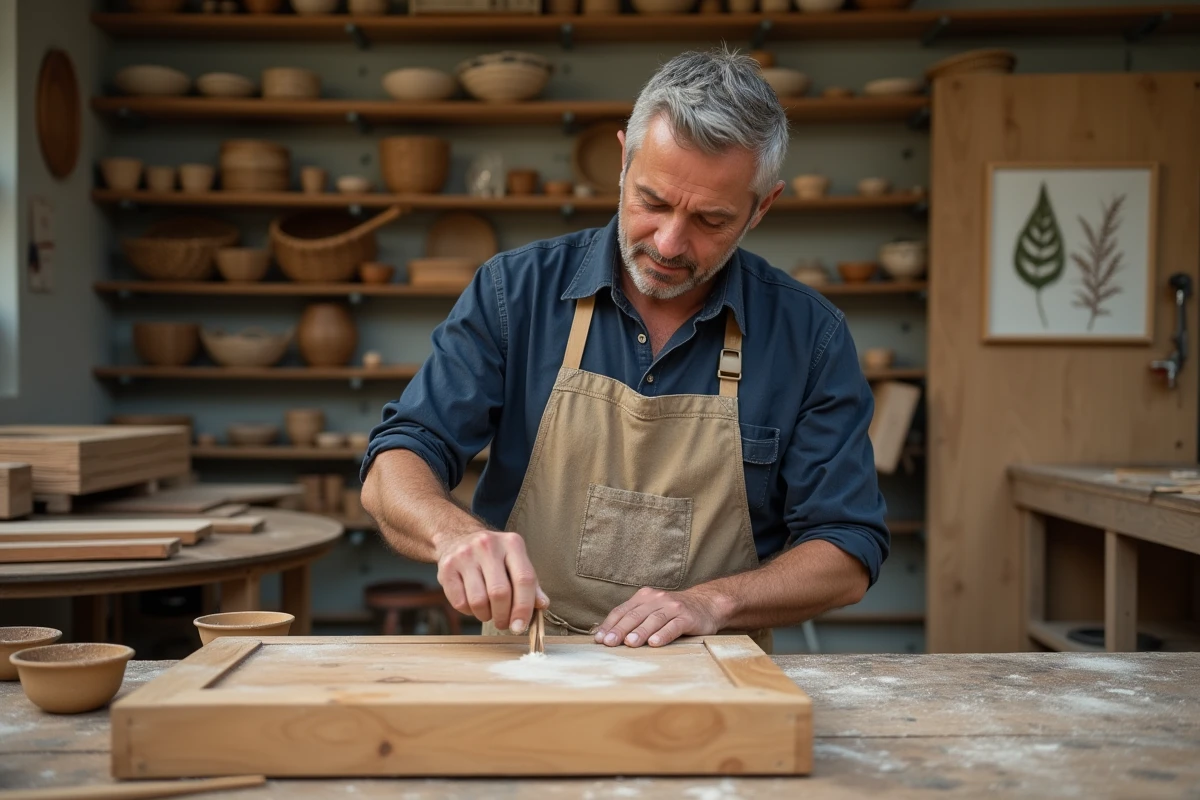
The Chamber of Trades and Crafts of Gironde documents in its annual report 2025-2026 (published in February 2026) a trend towards collaborations between Bordeaux artisans and Scandinavian designers. These partnerships produce upcycled pieces that blend local wood and recycled vinyl, resulting in neither rustic nor industrial aesthetics.
This co-creation model is reproducible on a small scale. Contact a cabinetmaker or carpenter in your area and propose to work with reclaimed material: an old door, leftover parquet, or an oak tabletop. Artisanal know-how transforms a mundane element into a unique piece, provided that a precise specification is defined in advance.
- Specify the dimensions, intended use, and expected finish from the first exchange with the artisan
- Provide the cleaned reclaimed material, free of fasteners, so the artisan can assess its potential
- Accept the imperfections of the original material: they are the visual markers that distinguish the piece from a mass-produced item
The intersection of local craftsmanship and reused materials defines an increasing part of Bordeaux’s decorative identity. It is not a fixed style: it is a manufacturing method applicable to any aesthetic register of your interior, from contemporary to the most classic.