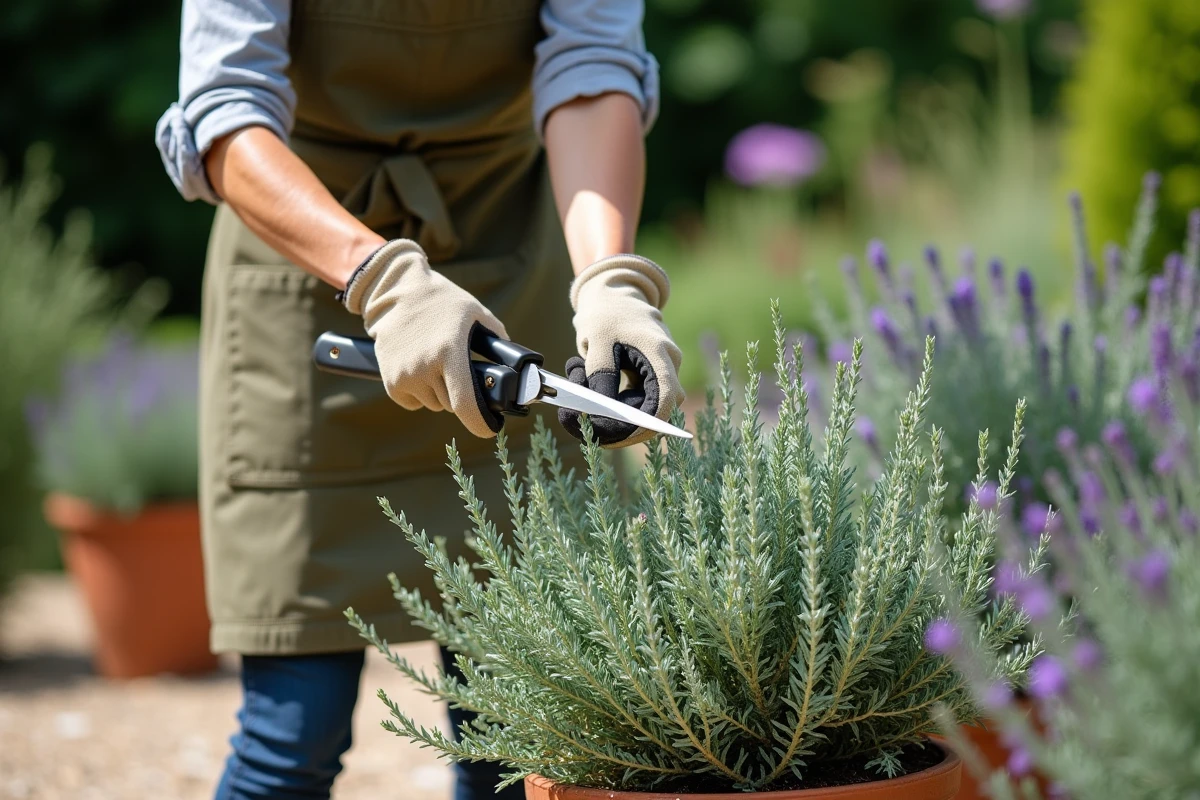
Bush sage forms an airy bush that blooms for several months without requiring much attention. The question of whether pruning is really necessary deserves to be asked from a precise angle: what type of cut, at what time, and for what measurable result on the density of the foliage and the duration of flowering?
Pruning bush sage: comparison according to the type of intervention
Not all pruning produces the same effect. The table below summarizes the three common interventions, their timing, and their observable impact on the plant.
| Type of pruning | Period | Cutting intensity | Main effect |
|---|---|---|---|
| Spring maintenance pruning | End of frost (March-April) | Reduction of about one third | Compact growth, increased branching |
| Summer cleaning pruning | After the first wave of flowers | Removal of faded spikes | Stimulating a second flowering |
| Rejuvenation pruning | Spring, after frost | Severe cutting back on young wood | Regrowth of shoots on a bare plant |
The difference between these three actions lies as much in the timing as in the depth of the cut. Asking when to prune bush sage ultimately comes down to choosing which of these interventions corresponds to the actual state of the plant.
Two-step pruning: the schedule that extends flowering
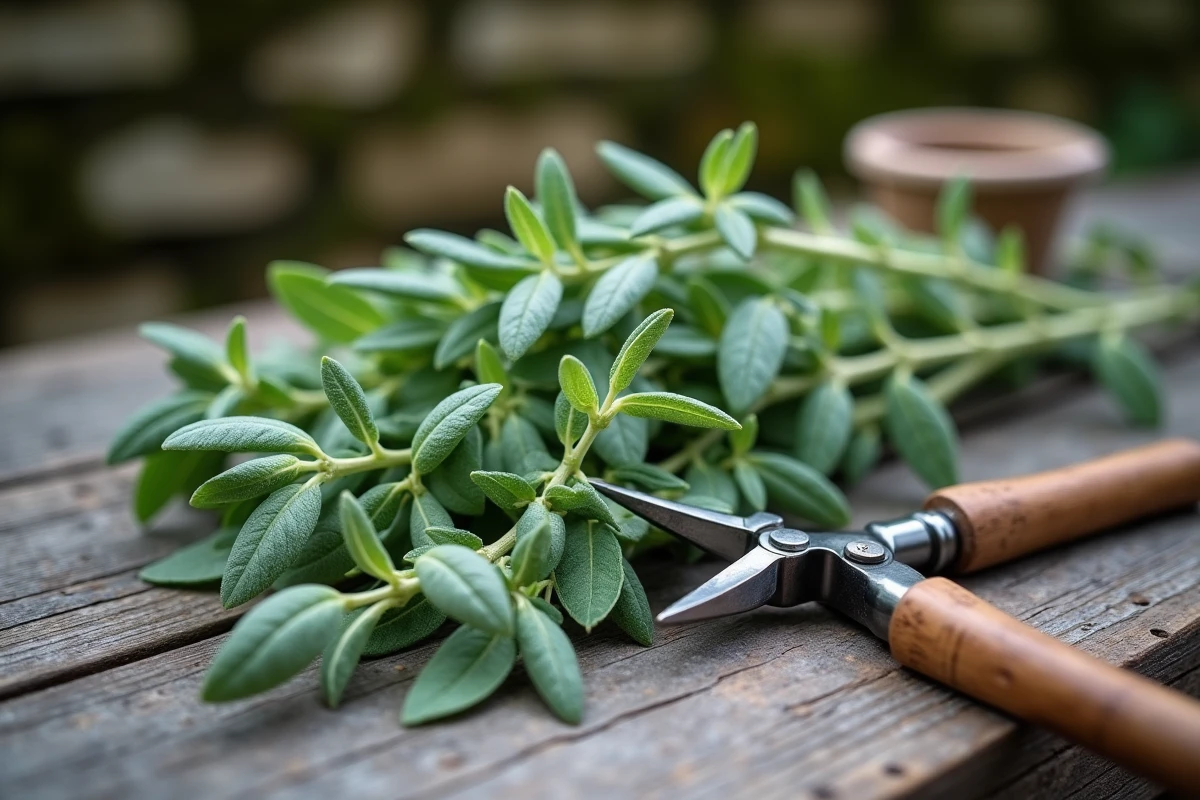
Most guides recommend a single pruning in spring. This approach works, but it overlooks a lever often ignored: two-step pruning to trigger a second bloom.
First intervention after winter
As soon as the last frosts have passed, shorten the branches from the previous year. The goal is to stimulate branching from buds located on still green wood. Cut just above a visible node, without going into the gray, woody part.
This spring cut signals the plant to produce several lateral stems where there was only one. The result is visible within a few weeks: the bush thickens and prepares its first floral spikes.
Second cut after the first flowering
When the first spikes fade, a light cleaning cut removes the withered stems. This action prevents the plant from dedicating its energy to seed production. The second flowering then occurs a few weeks later, extending the colorful season until autumn.
On the other hand, if this second cut is neglected, the sage often finishes its flowering earlier and takes on a messy appearance by late summer.
Rejuvenation pruning on woody bush sage
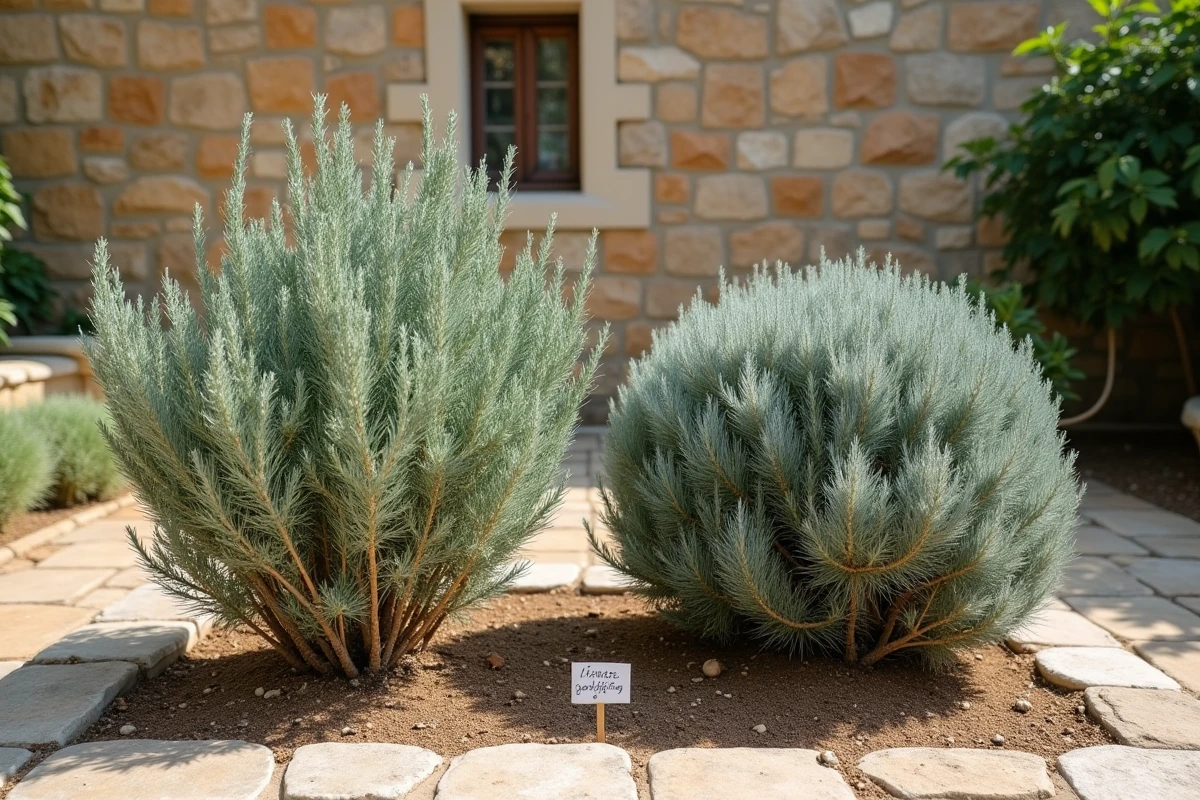
Over the years, an unpruned bush sage becomes bare at the base. The stems become woody, the foliage concentrates at the top, and the bush loses its rounded silhouette. Rejuvenation pruning corrects this problem, but it follows different rules than maintenance pruning.
Severe cutting back is done exclusively in spring, after the frosts, to give the plant the entire growing season ahead. Cut lower than in a classic pruning, targeting the sections of stem where dormant buds or green wood can still be seen beneath the bark.
The trap is to cut into the old dead wood, gray and dry. Bush sage has difficulty regrowing from completely lignified wood. If the base is bare for more than half its height with no visible buds, replacing the plant may sometimes be the most realistic solution.
Post-pruning care to promote recovery
The care following severe cutting back determines the speed of recovery. Here are the steps to follow:
- Water regularly in the weeks following the cut, especially if spring is dry, to support the production of new shoots.
- Mulch the base with a few centimeters of organic material to maintain soil moisture and limit root competition.
- Avoid any strong nitrogen fertilizer that would promote soft foliage at the expense of stem strength.
Common pruning mistakes and health risks
Pruning at the wrong time or with an unsuitable tool exposes bush sage to problems that go beyond mere aesthetic concerns.
Late autumn pruning weakens the plant against frost. The young shoots triggered by the cut do not have time to harden before the first cold nights. The risk is greater in regions where temperatures regularly drop below zero.
Using a non-disinfected pruner can transmit fungal diseases from one plant to another. This point is rarely mentioned for sages, while it is systematically noted for roses or fruit trees. A quick wipe of the blade with alcohol between plants is sufficient.
Another common mistake: pruning too short in one go on a weakened subject. A gradual reduction, spread over two seasons, yields better results than a radical cut that deprives the plant of most of its leaf surface.
- Never prune during a frost or active heatwave.
- Always cut at an angle, slightly above a node facing outward from the bush.
- Limit the cut to one third of the total volume during a classic maintenance pruning.
Pruning bush sage is not complicated, but the result depends more on timing than on the technique itself. A spring cut followed by a cleaning after the first flowering covers almost all needs. Rejuvenation cutting remains a corrective action, useful especially when the plant has been left unattended for several years.