You’re looking for a sewing machine, and the first recommendation you find is a “versatile” model that’s supposed to do it all. Alterations, hems, jersey sewing, even embroidery. In practice, a machine that promises everything often performs each task at an average level. Choosing a sewing machine in 2024 should be based on your actual usage, not on a technical sheet as long as a formal dress pattern.
Versatile or specialized sewing machine: the real criteria for choice
Have you noticed that some machines boast over 200 sewing stitches, while most projects only use about ten? Straight stitch, zigzag, buttonhole, and a stretch stitch cover the majority of common needs. The dozens of decorative stitches left are only useful if you do regular embroidery or creative sewing.
The classic trap is buying a mid-range machine “that does everything” and discovering that it struggles with thick fabrics. A pair of jeans folded four times or faux leather requires a robust mechanism, powerful feed, and an appropriate needle. A machine designed for light alterations won’t meet this need, regardless of its number of stitches.
Before buying, ask yourself a simple question: what project will you do most often? If the answer is “hems and small alterations,” a basic mechanical machine will suffice. If you’re sewing complete garments from varied fabrics, an electronic model with automatic tension adjustment will be more comfortable. To consult a comparison of sewing machine reviews, filtering by usage rather than price simplifies the search.
Mechanical or electronic sewing machine: what it changes in daily use
The difference between mechanical and electronic isn’t just about price. It affects how you interact with the machine with each stitch.
Mechanical machines: robustness and simplicity
On a mechanical machine, you adjust the stitch length and width with knobs. The thread path is often directly indicated on the machine, sometimes numbered step by step. Fewer functions mean fewer possible breakdowns. For occasional alterations or learning to sew, it’s a logical choice.
Mechanical models like those from the Singer Heavy Duty range are known for their ability to sew through thick fabrics. Their motor delivers a sewing speed and needle penetration force superior to many entry-level electronic machines.
Electronic machines: comfort and precision
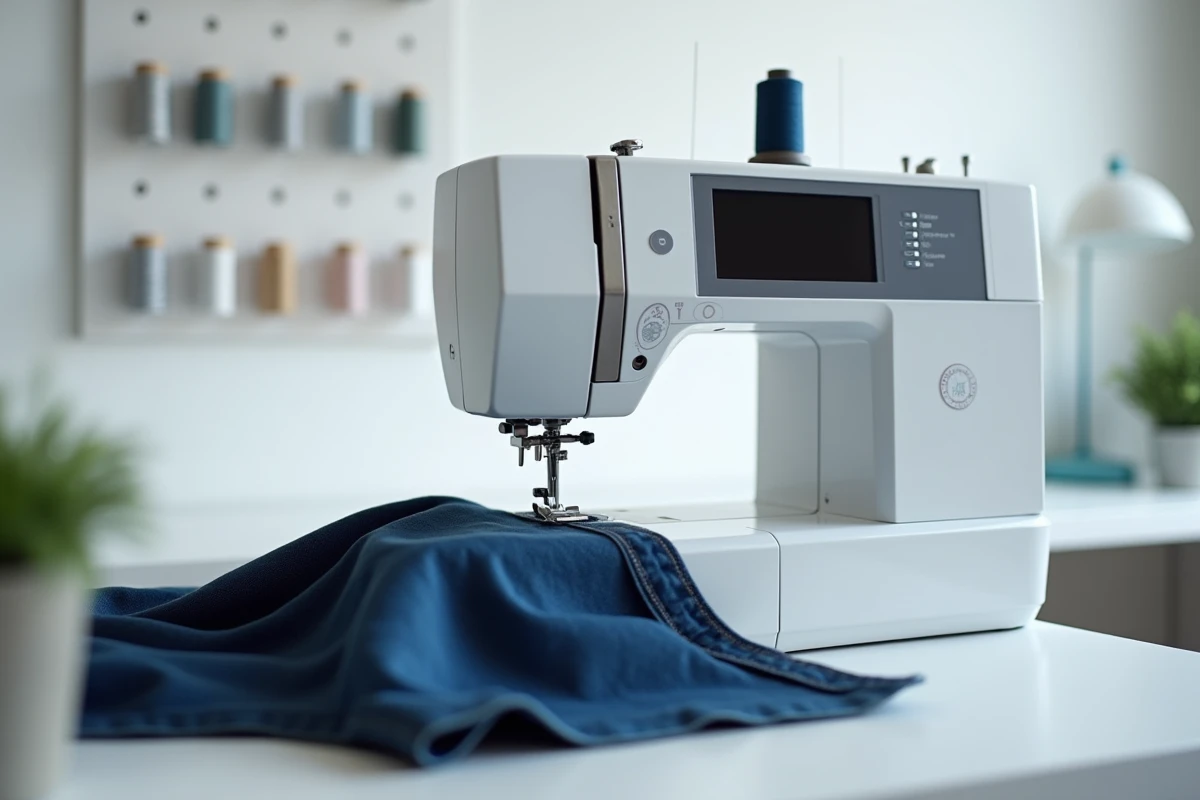
An electronic machine automatically adjusts the thread tension according to the selected stitch. You choose a stitch on a screen or button, and the machine adjusts length and width for you. This time-saving feature is real when switching from jersey to cotton in the same project.
Models from Brother, Juki, or Bernette offer electronic ranges with features like one-step automatic buttonholes, built-in thread cutters, or memory settings. These features may seem secondary, but they reduce handling during long sewing sessions.
Presser feet and feed dogs: the details that make the difference
Many guides discuss the number of stitches. Few focus on the presser feet included with the machine, even though the presser foot determines what you can actually sew.
- The standard foot (or zigzag foot) is suitable for most straight and zigzag stitches on medium fabric
- The zipper foot allows you to sew very close to the teeth, a common action in garment making
- The buttonhole foot automates the creation of buttonholes in one or four steps depending on the model
- The walking foot (or dual feed foot), often sold separately, becomes almost essential for slippery fabrics like jersey or satin
The feed dogs, located under the fabric, play a comparable role. Seven-row feed dogs pull the fabric more evenly than four-row feed dogs. On entry-level models, this difference results in uneven stitches on thin or stretchy fabrics.
Budget and sewing machine brands: where to set the cursor
Why do some machines cost three times the price of others, for seemingly similar results? The answer lies in three areas: the quality of the construction (metal or plastic), the motorization, and the included accessories.
Machines with a metal internal chassis handle sewing thick fabrics better over time. A fully plastic construction is suitable for occasional use, but it vibrates more at high speeds and wears out faster.
- Under 200 euros: entry-level mechanical machines (Singer, Brother), suitable for alterations and simple projects
- Between 200 and 500 euros: mid-range electronic models (Brother Innovis, Bernette, Juki), with automatic adjustment and more feet included
- Above 500 euros: high-end machines (Husqvarna Viking, Janome, Pfaff), designed for regular use and demanding projects like patchwork or embroidery
Singer and Brother dominate the entry-level segment. Juki is often cited for the quality of its feed and the consistency of its stitches. Husqvarna Viking and Pfaff position themselves in the high-end market with patented feed systems.
Choosing a machine slightly above your current level remains sound advice if you plan to progress. A machine that is too basic can hinder learning by making certain actions unnecessarily difficult.
The choice of a sewing machine should not be based on a list of functions, but on a match between your sewing projects and the actual capabilities of the machine. A well-chosen model for your primary use will accompany you for years, while a poorly targeted “universal” model will end up in a closet after a few months of frustration.