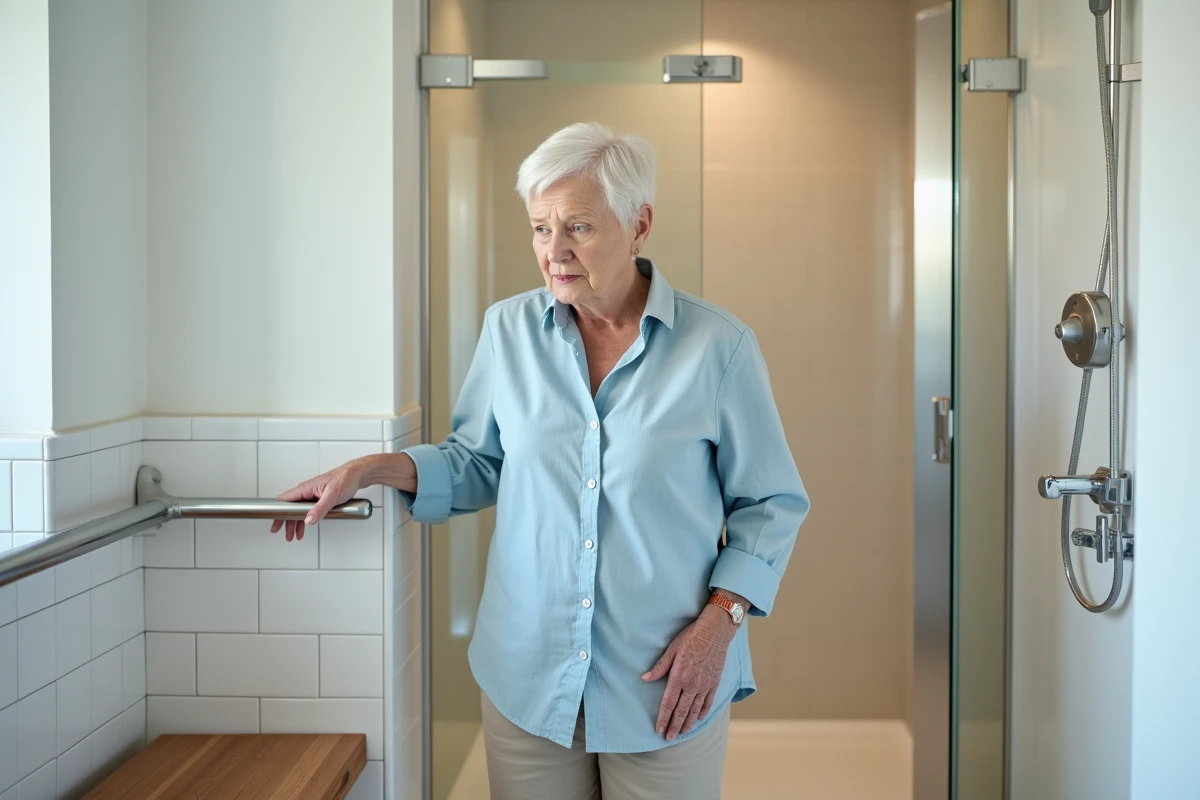
When you need to replace a bathtub that has become dangerous for a parent who has already slipped twice, the first question is not aesthetic. It’s the funding that is a hurdle. Between MaPrimeAdapt’, the APA, the PCH, and local aid, programs exist, but their coordination remains unclear for many families. Here’s how to navigate it concretely in 2024.
Work ceiling and coverage rate: what MaPrimeAdapt’ really covers
MaPrimeAdapt’, effective from January 1, 2024, has replaced several previous aids (including “Habiter facile” from Anah). Its operation is based on a ceiling of 22,000 euros excluding tax for eligible work. The funding rate depends on the household’s income.
For very low-income households, the grant covers up to 70% of the cost of the work, which is a ceiling of 15,400 euros in grants. For low-income households, the rate drops to 50%, with a ceiling of 11,000 euros.
Among the aids for senior bathroom adaptations, this program is at the top of the list, as it covers most items: replacing a bathtub with a walk-in shower, installing grab bars, raising toilets, and non-slip flooring.
A point often overlooked: MaPrimeAdapt’ is cumulative with MaPrimeRénov’. If you take advantage of the project to improve ventilation or replace an old water heater, both grants can be combined for the same operation. This changes the overall budget.
Financial setup for senior bathrooms: combining APA, PCH, and local aid
MaPrimeAdapt’ does not cover everything, especially when the estimate exceeds the ceiling or when the remaining costs are too high. Other levers can then be mobilized in parallel.
APA and home adaptation
The personalized autonomy allowance (APA) is granted to individuals aged 60 and over who are losing autonomy (GIR 1 to 4). It can finance equipment related to staying at home, including bathroom adaptations. The aid plan is built with an evaluator from the departmental council, who determines the actual needs.
In practice, the APA often serves to complement MaPrimeAdapt’ for specific items (wall-mounted shower seat, transfer bar). Feedback on this point varies by department: some accept the combination without difficulty, while others require additional documentation.
PCH for disability situations
The disability compensation benefit (PCH) is aimed at people with disabilities, with no age condition for the initial request. It finances housing adaptations based on a plan validated by the MDPH. For a bathroom, this may include widening the door, installing an accessible shower for wheelchairs, or motorizing a shutter.
APA and PCH cannot be combined for the same items. You must choose the program that best suits the situation.
Departmental aid and pension funds
Several departments offer complementary grants for adapting the housing of seniors. Pension funds (CARSAT, MSA, AGIRC-ARRCO) also have dedicated funds for staying at home. The amounts and conditions vary by organization, but you can obtain:
- A flat-rate aid from the main pension fund for safety-related work (bars, flooring, walk-in shower)
- A zero-interest loan or a subsidized loan through certain mutuals or local authorities
- A tax credit of 25% on equipment specifically designed for accessibility (under conditions)
Concrete path: from needs assessment to MaPrimeAdapt’ payment
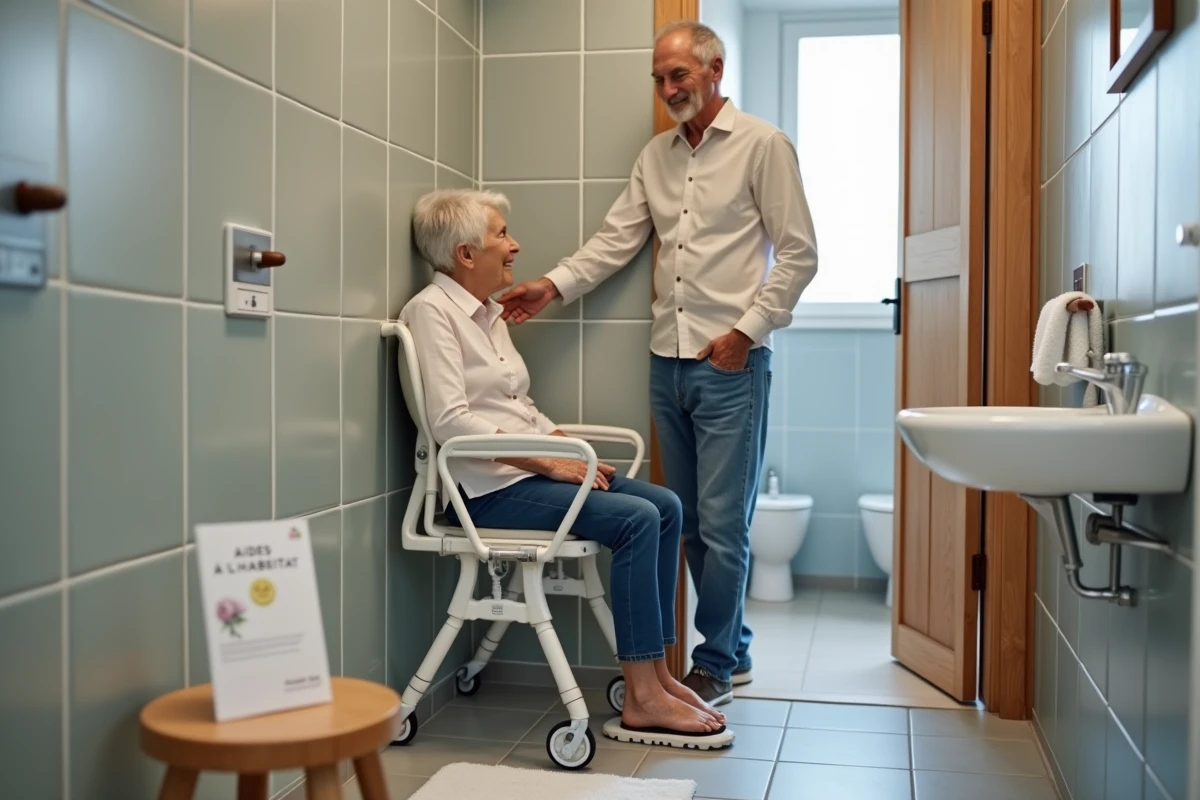
On the ground, the administrative process follows a four-step logic. Knowing these steps avoids back-and-forth and rejected estimates.
- An autonomy diagnosis is carried out by a professional (occupational therapist or management assistant mandated by Anah) who assesses the actual needs in the bathroom
- The work project is built with a certified RGE craftsman or Handibat qualified professional, based on the diagnosis
- The file is submitted on the Anah platform with the estimates, income documentation, and diagnosis
- Payment occurs after the work is completed, upon presentation of invoices, which often requires advancing the funds
This last point poses a problem for low-income households. Some local authorities offer an advance payment or pre-financing, but this is not systematic. Checking with the departmental Anah agency before signing the estimate allows for anticipating cash flow.
Reduced VAT and tax credit: two underestimated fiscal levers
When adding up direct aids, we sometimes forget the tax advantages that lighten the bill without additional paperwork.
Bathroom adaptation work in a home completed more than two years ago benefits from a VAT rate of 10% instead of 20%. The craftsman applies this rate directly to the estimate, without any action from the individual.
The tax credit for accessibility allows you to deduct 25% of the cost of eligible equipment (fixed wall-mounted shower seat, grab bar, toilet raiser). This credit applies whether you are taxable or not, as it is refundable.
Combining MaPrimeAdapt’, tax credit, and reduced VAT for the same project of replacing a bathtub with a secure shower can reduce the remaining costs to a few hundred euros for a very low-income household. It is on this overall setup that one should reason, not aid by aid.
The project of adapting a senior bathroom is not just about choosing a shower. It is a combination of funding that requires crossing national, departmental, and fiscal programs. Starting with the autonomy diagnosis, obtaining detailed estimates item by item, and then checking the combination of aids before committing remains the most reliable method to limit the remaining costs.