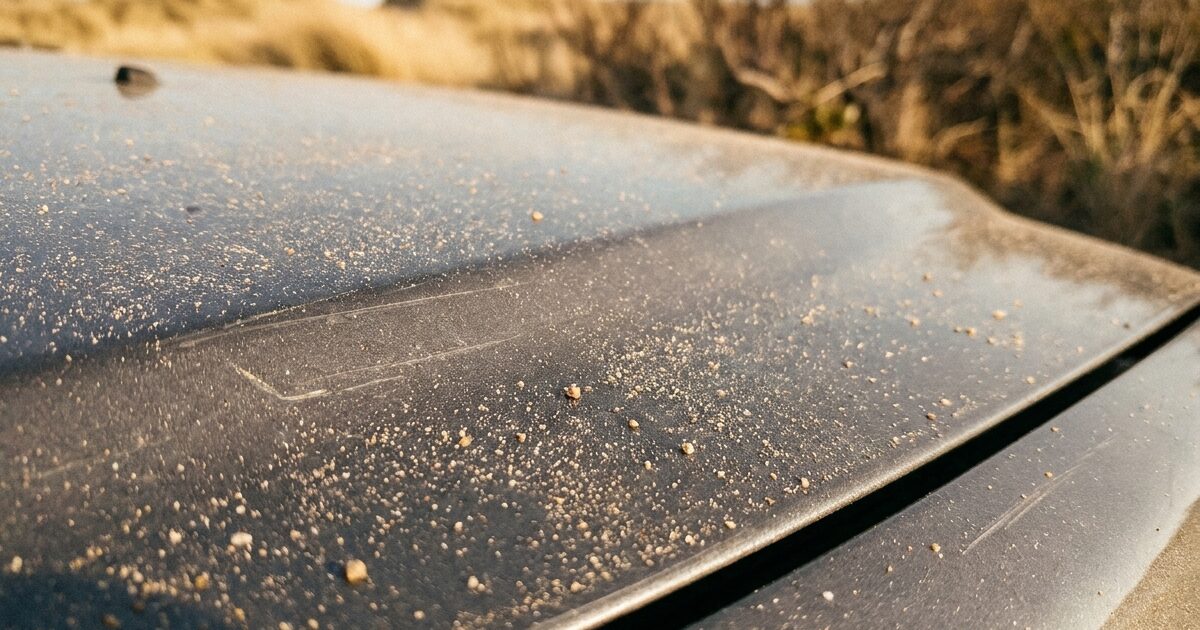
Sand deposited on a car’s bodywork forms a layer of mineral particles with sharp edges. Wiping the surface with a cloth, even a microfiber one, means dragging abrasive grains directly across the clear coat. The result is visible in raking light: a network of micro-scratches that dulls the paint and weakens the vehicle’s protective finish.
The mineral composition of sand and abrasion on automotive clear coat
Sand is made primarily of silica, a mineral that is much harder than automotive clear coat. On the Mohs scale, silica ranks at 7, while automotive clear coat ranges from 2 to 4, depending on the manufacturer.
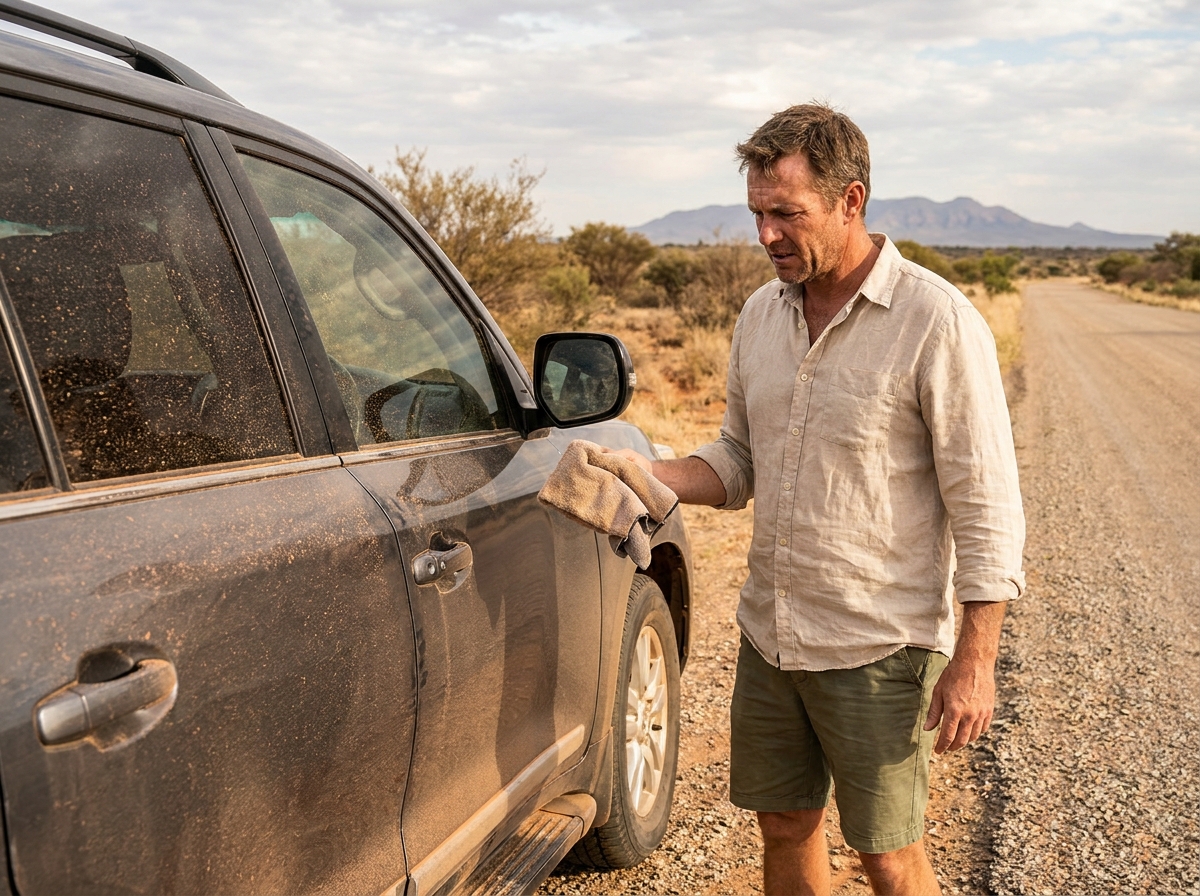
This difference in hardness explains everything. When a cloth presses these grains against the surface, each particle cuts a groove into the clear coat. You don’t need to press hard: the weight of the cloth and a circular motion are enough to cause scratches visible in direct light.
Saharan sand, carried by the wind as far as France, has a fine grain size that can be misleading. The grains look powdery, almost harmless. Yet their fineness makes them harder to dislodge with a simple puff of air, and they remain just as abrasive. A deposit of Saharan sand on your car’s bodywork calls for exactly the same precautions as coarse beach sand.
Unlike organic dust (pollen, topsoil), sand does not break down under pressure. It retains its sharp edges even when wet. A damp cloth makes no difference: water does not dissolve silica or eliminate mechanical friction.
When these micro-scratches build up on the paint, light scatters instead of reflecting. The color loses depth, and the vehicle looks older. If the scratches reach the base coat beneath the clear coat, corrosion may eventually set in. At that point, the damage is no longer just cosmetic, and the most extensive repairs may fall under comprehensive car insurance.
Contact-free rinsing: the only safe way to remove sand
The rule to remember is simple: nothing should touch the car’s bodywork until the sand has been washed away with water. No sponge, no cloth, no squeegee. Pressurized water dislodges the grains without dragging them across the paint.
High-pressure wash at a car wash
A self-service high-pressure wash bay is the most accessible option. Sweep the jet over the car from top to bottom, keeping it at least thirty centimeters away, to lift the particles without spraying them onto the adjacent surface.
The angle of the jet matters just as much as the pressure. A perpendicular jet presses the sand against the surface before dislodging it. A jet angled at around 45 degrees pushes the particles down the bodywork, reducing the risk of spreading them over an area that has already been rinsed.
Two passes are better than one long one. The first dislodges most of the grains. The second removes residue trapped in gaps (door seams, mirror edges, rocker panels). Only after this double rinse should you consider contact washing with a mitt and lubricating car shampoo.
Garden hose at home: an alternative with caveats
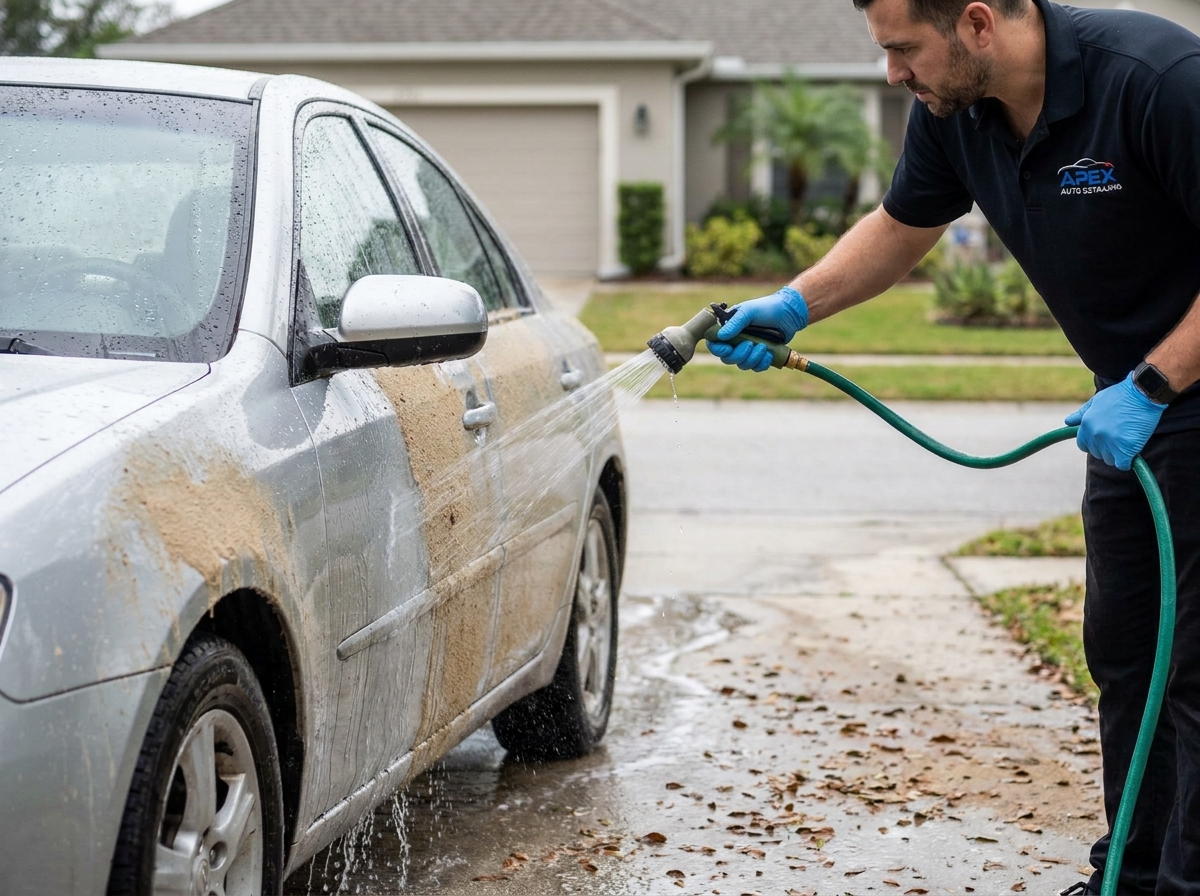
If there’s no car wash nearby, a garden hose may be enough if the water flow is strong. The pressure will be lower, so rinsing will take longer and use more water. Let plenty of water run over each panel, and avoid wiping the surface at any point in between.
However, be aware that washing your car at home may be prohibited during a drought under a prefectural order. Restrictions vary by department and alert level. In Meurthe-et-Moselle, for example, the move to heightened alert kept the ban on washing cars at home in place while allowing professional car washes to operate. Check the order in force in your municipality before turning on the hose.
Common mistakes after sand settles on your car’s paint
Some common reactions make the problem worse instead of solving it. Knowing what to avoid can save you the cost of polishing or repainting.
- Wiping the windshield with the wipers: the blades press the sand against the glass and scratch it in arcs. Rinse it with a jet first, then use the wipers with plenty of washer fluid.
- Using a duster or soft brush: even an antistatic duster drags grains across the surface. Sand is too hard and too angular for this kind of tool.
- Taking the car through an automatic car wash without a pre-rinse: the fabric brushes trap the grains and rub them over the entire bodywork. Some car washes offer a separate high-pressure pre-wash cycle, which you should select before entering the wash bay.
- Waiting several weeks before rinsing: sand mixed with morning moisture (dew, light rain) forms a paste that sticks to the clear coat. The longer the deposit dries and gets wet again, the more firmly it adheres and the longer rinsing will take.
Car washes and water restrictions: access varies by department
Access to a professional car wash is not always guaranteed. During droughts, prefectures may restrict or prohibit car wash operations, including self-service facilities.
Exemptions are not consistent everywhere. In Saône-et-Loire, the reopening of car washes distinguished between high-pressure bays, automatic wash systems on economy programs, and automatic wash systems capable of recycling a significant proportion of the water used. This recycling threshold applied only under the local order and is not a nationwide rule.
For drivers, this means that after a sandstorm during the summer, the nearest car wash may be closed. Finding a car wash with a water recycling system in advance increases the chances of being able to use it even when restrictions are in place.
After rinsing: protect the clear coat for future sandstorms
Once the sand has been rinsed away and the car washed, applying wax or a ceramic coating helps prevent future deposits from sticking. A protected surface is smoother, so grains slide off more easily under the jet and come away with less pressure.
This treatment does not make your car invulnerable to sand. It creates a sacrificial layer that takes the brunt of micro-abrasion instead of the original clear coat. Reapplying this protection after every significant sandstorm helps extend the life of the paint.
The most effective precaution is also the simplest: park your vehicle under cover when Météo-France forecasts a Saharan dust event. A garage, carport, or even a cover laid over the car without rubbing the bodywork can prevent the problem at its source, without water or cleaning products.