
Obtaining or changing a vehicle registration certificate involves several documents, strict regulatory deadlines and an online platform that leaves no room for errors in your application. The registration certificate is required to drive a vehicle legally, and each situation (used-car purchase, inheritance, import) triggers a separate procedure with its own supporting documents. Understanding how these procedures differ in complexity helps you anticipate potential roadblocks before they leave your vehicle off the road.
Cost and complexity by type of vehicle registration procedure
Not all vehicle registration certificate applications are the same. The table below compares the main procedures against three criteria: the number of required documents, whether regional tax applies and the risk of being blocked online.
| Type of procedure | Specific documents | Regional tax | Risk of being blocked |
|---|---|---|---|
| Change of registered owner (used vehicle) | Transfer code, old registration certificate marked as sold, administrative status certificate, roadworthiness test | Yes | Medium (missing transfer code) |
| First registration (new vehicle) | Manufacturer’s certificate of conformity | Yes | Low |
| Import (EU) | Tax clearance certificate, certificate of conformity, French or foreign roadworthiness test | Yes | High (tax clearance + conformity) |
| Change of address | Proof of address | No | Low |
| Inheritance | Proof of heir status, consent from co-heirs | Yes | High (notarial documents) |
A change of address is the simplest procedure: there is no regional tax, only a €2.76 delivery fee, according to France Titres. By contrast, importing a vehicle involves both a tax-related step (the tax clearance certificate) and a technical approval, which extend processing times.
For more information, Déclic Auto’s administrative procedures page explains each process and provides the relevant forms, helping you prepare your application before submitting it online.

Online application blocked: how to resolve the issue without taking the vehicle off the road
The France Titres platform (formerly ANTS) rejects an application if a document is missing or does not meet the requirements. The most common issue when buying a used vehicle is the transfer code: if the previous owner has not completed their online declaration of sale, the portal blocks the change-of-owner application.
Three common reasons for a blocked application and how to resolve them
- Transfer code not provided: contact the seller and ask them to complete the declaration online. If the seller cannot be reached, an authorized professional can submit the application using the old registration certificate marked as sold and proof of transfer of ownership.
- Tax clearance certificate missing for an import from the European Union: you can request the certificate online through France Titres, then resume the registration application once you have received it. The vehicle cannot be driven legally in France until this tax-related step has been approved.
- Inheritance without the consent of all heirs: the application requires proof of heir status and, depending on the circumstances, written consent from the co-heirs. A notary can issue a certificate of inheritance that unblocks the process, but processing times vary depending on the complexity of the estate.
In each of these cases, the vehicle must remain off the road until the registration certificate has been issued. Regulations allow one month from the date of transfer to change the registered owner. Missing this deadline can lead to complications during a roadside check.
The temporary registration certificate
Once your complete application has been accepted online, France Titres issues a temporary registration certificate (CPI). This document allows you to drive legally for one month while you wait for the permanent registration certificate to arrive by post. A CPI is issued only once the application has been approved, making it all the more important to prepare a complete application in advance.
Technical modifications and vehicle registration: what the standard procedure does not cover
The registration certificate reflects the vehicle’s technical specifications. Any modification (a change of bodywork, conversion for agricultural use or registration as a classic vehicle) requires a separate procedure from a simple change of owner or address.
An individual vehicle approval report (RTI) may be required to confirm that the vehicle complies with regulations after modification. This involves an inspection by the DREAL (Regional Directorate for the Environment, Planning and Housing), which checks that the modified vehicle meets the applicable safety and emissions standards.
A change of use (for example, converting a utility vehicle into a leisure vehicle) changes the category shown on the registration certificate, directly affecting the amount of regional tax and roadworthiness testing requirements. Failing to declare a technical modification can result in a failed roadworthiness test and a non-compliant registration certificate.
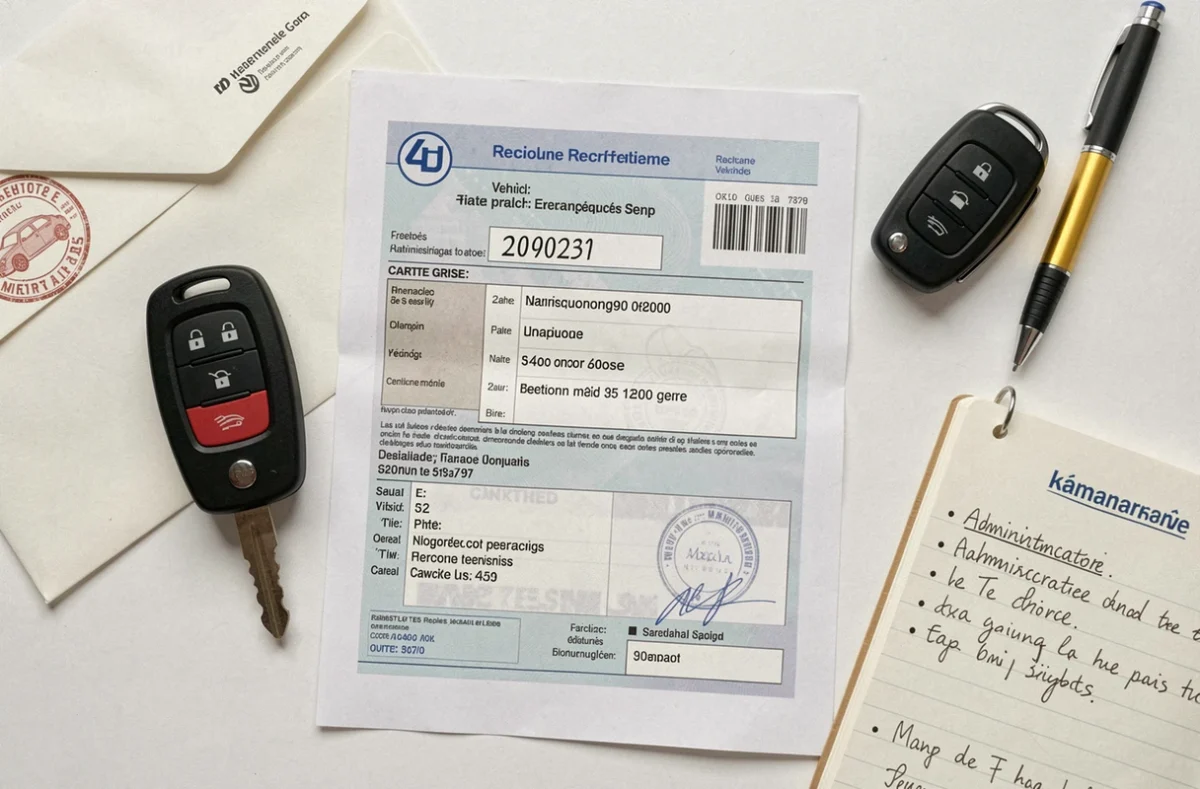
Documents required for vehicle registration: standard requirements and situation-specific documents
Regardless of the type of procedure, the same core documents are required.
- Valid ID for the applicant
- Proof of address dated within the last six months
- Proof of insurance covering the vehicle
- Driving licence for the vehicle category
Additional documents depend on the situation. For a used vehicle, the certificate of transfer (cerfa 15776), the old registration certificate marked as sold and the administrative status certificate are required in addition to the standard documents. For a new vehicle, the manufacturer’s certificate of conformity replaces the old registration certificate.
Scanning each document before starting the online procedure helps avoid repeated submissions. France Titres accepts image or PDF files, but rejects documents that are illegible or cut off, which is a common reason for incomplete applications.
The one-month deadline for completing a change of registered owner starts on the date of transfer declared by the seller, not the date you receive the vehicle. Preparing your application in advance, with all documents scanned and the transfer code to hand, reduces the risk of missing this regulatory deadline.