
The telephone code +39 (or 0039 from a landline) is the international dialing code assigned to Italy. In theory, any incoming call displaying this code comes from the Italian telephone network. The key phrase is “in theory”: number spoofing techniques now make it possible to display a +39 code even when the call does not actually originate in Italy. Understanding how this code is structured and what verification methods are available can help you quickly distinguish a legitimate call from a scam attempt.
Why the initial zero makes all the difference when dialing +39
Most countries require you to drop the zero from the local area code when dialing from abroad. Italy is an exception. Since 1998, the leading zero in landline numbers has been an integral part of the number itself.
To call a landline in Rome (area code 06), dial +39 06 followed by the number. Removing the zero out of habit, as you would with a French number, will make the call fail without an explicit error message. This is the most common reason a first call to Italy does not go through.
Italian mobile numbers start with 3 (31, 32, 33, 34, 36, 37, 38 or 39) and never have a leading zero. The rule about keeping the zero therefore applies only to geographic landlines. An article explaining which country the 0039 dialing code belongs to also explains the differences between these two formats.
The Vatican shares the +39 code with Italy. Its landlines use the 06 698 prefix, which is the same as Rome’s numbering plan. So receiving a call from +39 06 698 does not necessarily mean the caller is Italian in the strict sense.

+39 dialing code and number spoofing: what caller ID does not prove
A number displayed on your phone screen is not proof of the caller’s identity. The technique known as spoofing allows a caller anywhere in the world to make a legitimate Italian number appear on the recipient’s phone. VoIP networks hijack ranges of Italian numbers to make fraudulent calls look credible.
In France, Arcep received more than 19,000 reports related to number spoofing in 2025. On January 29, 2026, the authority opened an administrative investigation into operators assigned number ranges to examine the origin and routing of these spoofed calls. Since January 1, 2026, French operators have been required to display “private number” for any unauthenticated French mobile number when the call comes from abroad.
This measure limits some forms of spoofing involving French numbers, but it does not cover calls that display a foreign code such as +39. An Italian number shown on screen is not caught by this filter.
How to recognize a trustworthy +39 call: practical signs
No single technical indicator can guarantee that an incoming call is legitimate. Instead, look for several clues that you can assess in a few seconds.
- The displayed number follows a plausible Italian format: a landline starts with 0 followed by a known city code (02 for Milan, 06 for Rome, 055 for Florence), while a mobile number starts with 3. A +39 number that does not match any of these formats is suspicious.
- The caller identifies themselves without prompting, gives a verifiable name and explains the reason for the call clearly. Scam calls often use prerecorded messages or vague scripts that demand urgent action.
- The caller should never ask for your banking details or a verification code. No bank or Italian or French government agency will request this information over the phone.
- If in doubt, hang up and call the organization the caller claims to represent using the number listed on its official website—not the number displayed on your screen or provided during the call.
This last step is the most reliable. The displayed number can be faked, but the number you dial yourself from an official website cannot.
Reporting platforms to know
Services such as tellows.fr compile user feedback about reported numbers. Searching for a suspicious +39 number on one of these platforms can show whether other people have flagged it as unwanted. This is not definitive proof, but it can be a useful indicator before calling back an unknown number.
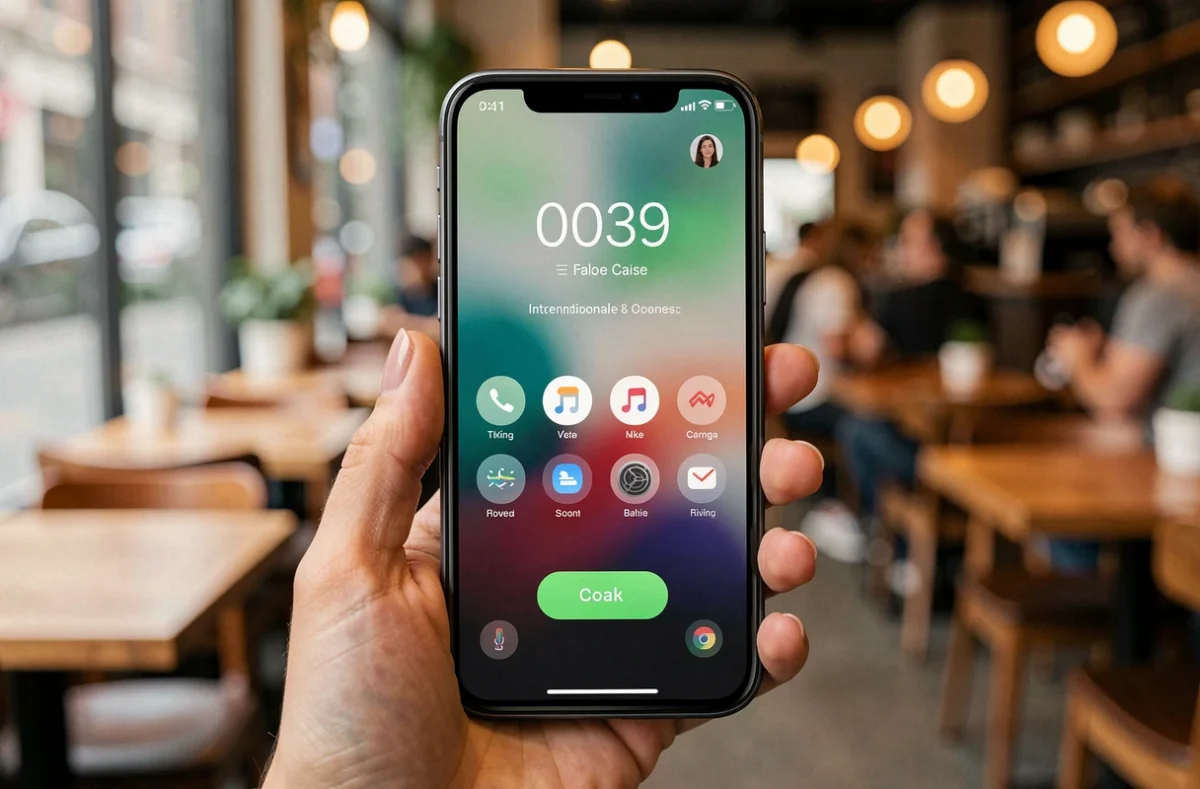
Dialing an Italian number from France: the exact sequence
The dialing sequence varies slightly depending on the device, but the principle is the same.
- From a French mobile phone: press and hold 0 to enter “+”, then dial 39 followed by the full number (including the leading zero for a landline, but without it for a mobile). Landline example: +39 02 1234 5678. Mobile example: +39 320 123 4567.
- From a French landline: dial 00 39, then the full number. The double zero replaces “+” and is the international access prefix used in France and most European countries.
- From Canada or the United States: the international access prefix is 011, followed by 39 and then the number.
Coverage under French phone plans varies. Most recent mobile plans include calls to Italian landlines and mobiles in their European allowance, but some budget plans charge extra. Check your provider’s terms before making a long call to avoid surprises on your bill.
+39 is one of the dialing codes French residents encounter most often, due to the countries’ geographic proximity and economic ties. Knowing how to distinguish its normal format from the typical signs of spoofing is now a practical skill, not just a technical one.